
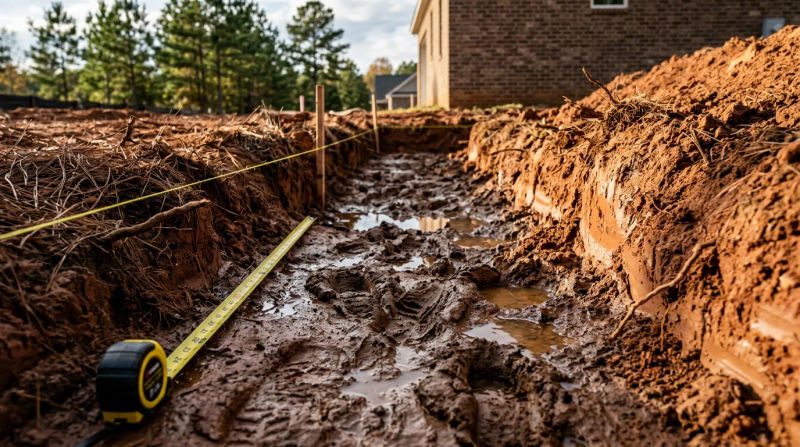
You’ve been planning this project for months. The permits are approved, the plans are finalized, and the excavation crew has just finished digging the trenches for your new home addition or detached garage. The concrete truck is scheduled for tomorrow morning, and everything seems to be on track. But as you walk the site in the cool October air, you notice something isn’t quite right. The bottom of the trench looks a little wet in one corner, and a small section of the wall has crumbled. Is this normal, or is it a red flag?
As an excavation foreman with over a decade of experience, I can tell you that the moments before the concrete pour are among the most critical. A solid foundation depends entirely on the ground it's built upon. Pouring concrete into a compromised trench is a recipe for costly future repairs. Here in Sanford, our clay-heavy soils can be particularly deceptive; they can look solid one day and turn to mush the next. Knowing what to look for can save you from a failed inspection and major headaches.
Common Signs and Symptoms
Before any concrete is poured, our technicians perform a final walk-through of the footing trenches. This standardized process ensures the subgrade is perfectly prepared to support the structure for decades to come. Here are some of the key footing excavation signs we look for that indicate a problem.
- Standing Water or Excessive Moisture: A little dampness can be normal, but any visible pooling of water at the bottom of the trench is a major warning sign. Water saturates the soil, drastically reducing its load-bearing capacity.
- Spongy or “Pumping” Subgrade: The bottom of the trench should be firm and stable. If you can walk on the subgrade and it feels soft, spongy, or moves up and down under your weight, you have a soft subgrade before concrete pour. This is a clear indicator that the soil cannot properly support the weight of the concrete and the structure above it.
- Collapsing or Sloughing Walls: The vertical walls of the trench should be clean-cut and stable. If you see soil crumbling, flaking, or caving in, this is known as foundation footing trench sloughing. It suggests the surrounding soil is unstable, either because it's too dry and brittle or too wet and heavy.
- Loose Debris, Organics, or Topsoil: The bottom of the footing must rest on undisturbed, competent native soil or engineered fill. Any loose dirt, rocks, roots, grass, or topsoil left in the trench will create voids and weak spots under the footing, leading to uneven settling.
- Inconsistent Depth or Width: Footing trenches are dug to precise specifications for a reason. If the trench is too shallow, it may not reach stable soil or be below the frost line. If it’s too narrow, it won’t provide enough surface area to distribute the load. Our crews use laser levels and meticulous measurements to ensure every inch is exact.
- Mixed or Smeared Soil Layers: When excavating, you should see clean layers of soil. If the soils at the bottom of the trench look smeared, mixed, or churned up, it often means the ground was too wet during excavation. The equipment can smear the clay, sealing it on the surface but hiding a soft, unstable layer just beneath.
- Cracks or Fissures in the Trench Bottom: In drier conditions, clay soils can shrink and develop cracks. While small surface fissures might not be an issue, larger cracks indicate significant soil movement and instability that must be addressed before pouring.
What Causes This Problem
Identifying the symptoms is the first step; understanding the cause helps prevent them. Most Sanford footing trench problems stem from two main factors: our local soil composition and the weather.
Soil Composition: The Sanford area is known for its clay and sandy clay soils. While strong when dry and properly compacted, clay soil behaves very differently when wet. It holds water like a sponge, and its particles can lose their bond, turning a seemingly solid base into a soft, unsupportable material. This is why a trench can look perfect one day and exhibit a soft subgrade before concrete pour after a single overnight shower. This is a particular concern for additions on older properties, such as the classic 1950s brick Ranch homes found throughout the area. Decades of drainage patterns and landscaping can alter soil moisture around an existing foundation, creating unpredictable conditions for new excavation.
Weather and Moisture: This is the biggest variable in any excavation project. October in North Carolina can bring drier air that wicks surface moisture away, making a trench feel ready. However, the risk of a sudden thunderstorm or a slow, drizzly day can quickly re-introduce moisture. Water is the primary enemy of a stable subgrade. It can enter a trench from:
- Rainfall: The most obvious culprit. Even a brief downpour can cause foundation footing trench sloughing and saturate the base.
- Groundwater Seepage: If the trench is dug near or below the local water table, groundwater will naturally seep in from the bottom and sides, creating persistent wetness.
- Poor Site Drainage: Water from roofs, driveways, or higher elevations can flow across the site and collect in the newly dug trenches if proper temporary drainage isn't established.
Improper Excavation Technique: The stability of a trench also depends on the skill of the operator and the process used. Rushing the job, using an oversized bucket that disturbs adjacent soil, or digging when conditions are too wet can all compromise the final result. A professional crew knows to stop work if the soil is too saturated and to use precise techniques to create clean, stable trench walls.
When to Call a Professional
While a homeowner can and should inspect the work being done on their property, addressing these issues is not a DIY job. The integrity of your entire structure rests on this initial step, and mistakes here are literally set in stone.
If you notice any of the seven signs listed above, you should immediately raise the concern with your builder or contact an experienced excavation professional. Do not let anyone convince you to pour concrete on a compromised subgrade. The short-term cost of delaying a pour to fix the subgrade is minuscule compared to the long-term cost of foundation repair.
An experienced professional will have the right tools and knowledge to remediate the problem correctly. This might involve:
- Dewatering: Pumping out any standing water from the trench.
- Over-Excavation: Digging out the soft, wet soil until they reach a stable, undisturbed layer.
- Adding and Compacting Stone: Backfilling the over-excavated area with crushed stone (like #57 stone) in lifts, compacting each layer to create a new, solid base for the footing.
- Waiting for Conditions to Improve: Sometimes, the only solution is to wait for the site to dry out properly.
Attempting to fix this yourself by simply shoveling out mud or throwing in some gravel without proper compaction will only hide the problem, not solve it. A qualified team understands soil mechanics and has the processes to ensure the fix is permanent and will pass a building inspection.
Conclusion
Your home's foundation is its most important component, and the footing trench is the foundation of that foundation. Ensuring it is clean, dry, stable, and dug to the correct dimensions is a non-negotiable step for a successful build. Be vigilant and look for the common footing excavation signs like pooling water, collapsing walls, and a spongy subgrade.
Understanding the challenges, especially with Sanford’s clay soils and unpredictable autumn weather, empowers you to ask the right questions. Don't be afraid to pause the project to ensure it's done right. Acting early is far better than dealing with settlement, cracks, and structural failure down the road.
If you notice any of these signs on your project, contact a local excavation professional for an inspection. Their expertise can ensure your project is built on a solid footing from the very start.