
When you’ve spent 14 years running crews, you learn to read a piece of land pretty quickly. When I first pulled up to a beautiful pre-1940s Craftsman home in a historic Greenville neighborhood, I could see the challenge right away. The homeowners wanted to build a new two-car garage with a workshop, a dream they’d had for years. They had their builder lined up and a concrete crew on standby. The problem was the build site: a sloped, soggy corner of their backyard that was more of a mud pit than a foundation for their dream. With October’s cooler weather arriving, the clock was ticking to get the site ready before winter rains could derail the whole project. They were worried about the timeline, the mess, and the fate of a gorgeous, mature oak tree that stood near the proposed footprint. They needed more than just a guy on a tractor; they needed a precise plan, and that’s why they called us at LRC Excavating and Grading.
The Assessment
During my initial walk-through with the homeowner, the issues became even clearer. The proposed location for the garage dropped nearly four feet from one corner to the other. You could see where water pooled after every rain, creating a soft, unstable area right where the concrete slab needed to go. This is classic Greenville clay. From the surface, it might look workable, but just a few inches down, it holds moisture like a sponge. Attempting a simple pad site prep without addressing the underlying water and soil issues would be a recipe for foundation failure down the road.
My primary concerns were:
- Soil Instability: The saturated clay soil lacked the structural integrity to support a 24x30-foot concrete slab and the weight of a new building. It needed to be properly excavated and re-compacted.
- Water Management: The natural slope directed all the runoff from the upper yard directly into the build area. Without a robust drainage solution, any new pad would be constantly undermined by water.
- Site Constraints: The property was beautiful but tight. We had to maneuver our equipment carefully to avoid damaging the established lawn, the driveway, and, most importantly, the protected root zone of that magnificent old oak tree. The home’s historic character demanded a delicate touch.
I explained to the homeowners that our approach at LRC Excavating and Grading is always to solve the root problem, not just treat the symptom. We wouldn't just scrape the ground level. We needed to perform a proper cut and fill, install a permanent drainage system, and build a pad that would remain stable for decades. This project was a perfect Greenville building pad preparation case study in the making, showcasing how to handle the specific challenges our region presents.
Our Solution
With the assessment complete, our team at LRC Excavating and Grading developed a comprehensive plan that prioritized stability, drainage, and property protection. We presented a clear, step-by-step process to the homeowners so they knew exactly what to expect. Our 4-person crew was scheduled to begin the following Monday, a timeline that kept the builder’s schedule intact.
Step 1: Site Protection and Access
Our first move wasn't digging, but protecting. We laid down a temporary access path using heavy-duty geotextile fabric topped with a layer of clean gravel. This created a stable road for our CAT 308 excavator and skid steer, preventing ruts in the lawn and keeping mud from being tracked onto the driveway. We also cordoned off the critical root zone of the oak tree with high-visibility fencing, a non-negotiable step for us.
Step 2: Cut, Fill, and Grade
Once the site was secure, the real work began. Our operator started by stripping the rich topsoil from the entire footprint and stockpiling it neatly for the homeowner to reuse in their garden beds. Then, we began the cut-and-fill process. We excavated soil from the high side of the slope, moving it to the low side and compacting it in 8-inch “lifts.” Using a rotating laser level, we constantly checked our elevations to ensure the base was perfectly level. This meticulous process is what separates a professional job from a rough guess. It’s a core part of the quality LRC Excavating and Grading delivers.
Step 3: Proactive Drainage Installation
This was the most critical phase. Before building the final pad, we focused on a permanent solution for site prep and drainage installation Greenville properties demand. We excavated a 24-inch-deep trench along the entire uphill side of the pad. Inside the trench, we laid perforated pipe wrapped in a filter sock and backfilled it with #57 drainage stone. This French drain system acts as a curtain, intercepting both surface water and subsurface groundwater and channeling it safely away from the building footprint. We took care of the water problem before it could ever affect the new foundation.
Step 4: Building the Final Pad
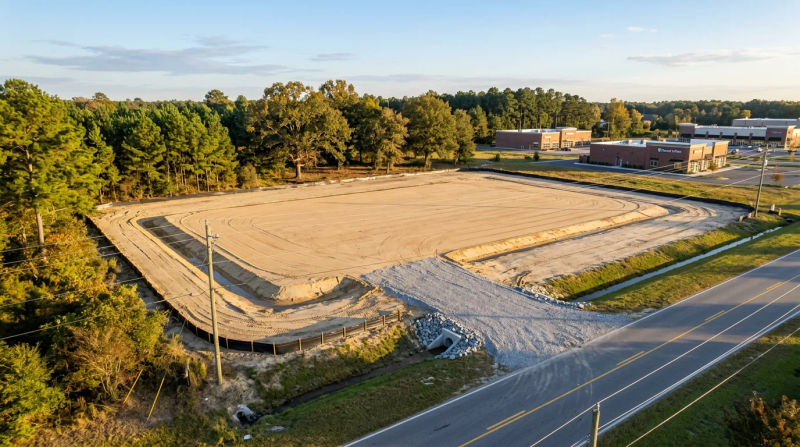
With the sub-grade level and the drainage in place, we were ready to build the pad itself. We brought in 40 tons of ABC stone (crusher run) and spread it in compacted layers to create a final 8-inch-thick pad that extended two feet beyond the planned foundation on all sides. Our operator used the skid steer with a grading attachment to achieve a perfectly smooth and level surface, verified one last time with the laser. The pad was now officially ready for the concrete crew.
The Results
The transformation was dramatic. In just four days, what was once a sloped, muddy patch of yard was now a clean, stable, and perfectly engineered building pad. The Greenville NC grading case study results speak for themselves. The homeowners were amazed at the speed and precision of our work. They commented on how our crew kept the site organized and clean throughout the process, a point of pride for our team at LRC Excavating and Grading.
- On Schedule and On Budget: We completed the entire pad site prep and drainage project in just four days, allowing the homeowner’s builder to start framing without any delay.
- A Solid Foundation: The concrete contractor who followed us was extremely impressed, noting it was one of the best-prepared pads they’d seen. The level surface and solid compaction made their job easier and ensured a better final product.
- Peace of Mind: Most importantly, the homeowners have total peace of mind. The integrated French drain system means they’ll never have to worry about water compromising their new garage foundation. The old oak tree was completely unharmed, and the rest of their property was left in pristine condition.
This project highlights the difference that careful planning and expert execution make. By addressing the soil and water issues head-on, we didn't just prepare a piece of ground; we created a lasting foundation for our client's vision. It’s the standard of quality we bring to every job at LRC Excavating and Grading.
Ready for your own LRC Excavating and Grading experience? Contact us today for a free inspection.