
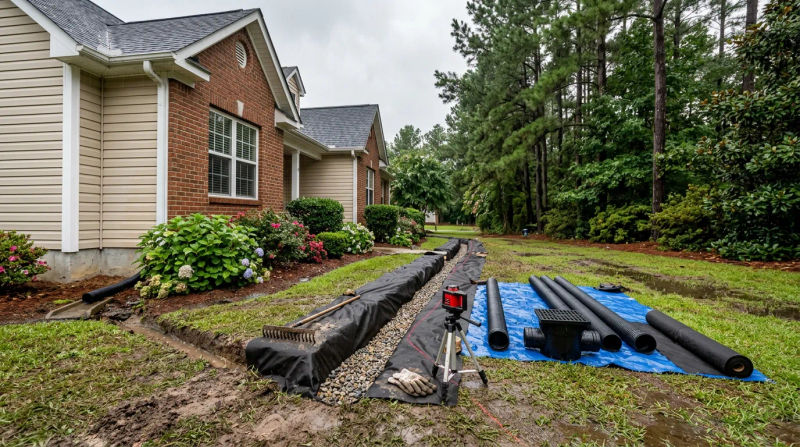
Hi, I’m Derek Langston. After 14 years running excavation crews, I’ve learned that when a homeowner calls about drainage, their first question is almost always, “How much is this going to cost?” It’s a fair question, and one you deserve a straight answer to. Especially here in Fayetteville, when the last of the hurricane season downpours roll through, you quickly find out exactly where every low spot and drainage problem is on your property. That soggy lawn or puddle near your foundation isn't just an eyesore; it's a problem that needs a real solution.
My goal here isn't to sell you anything. It's to pull back the curtain on the drainage work cost in our area so you can budget wisely and know what to expect. I'll walk you through the typical price ranges, what makes a project cost more or less, and how to make sure you're getting a solution that will last.
Average Costs in Fayetteville
Here in the Fayetteville area, we're dealing with unique Coastal Plain soils. Some spots drain in a flash, while others hold water like a bathtub. This means there's no one-size-fits-all price tag. The right solution depends entirely on your specific lot. A good contractor, like the team at LRC Excavating and Grading, will evaluate your property to see if a simple grading fix will work or if you need a more robust system.
Here are some realistic starting points for common drainage projects in our region:
- Simple Regrading & Swales: For minor pooling or redirecting surface water away from a foundation, creating a gentle slope or a wide, shallow channel (a swale) can be very effective. This is often the most budget-friendly option. The swale grading price Fayetteville homeowners can expect typically ranges from $1,500 to $4,000. This depends on the size of the area, how much soil needs to be moved, and site access.
- French Drain Installation: This is the classic solution for capturing and moving significant amounts of subsurface water away from your yard or foundation. It involves digging a trench, laying perforated pipe, and backfilling with gravel. The Fayetteville French drain installation cost is usually priced per linear foot and can range from $45 to $100+ per foot. A typical 50-foot drain might run from $2,500 to $5,000, but complex projects can certainly be more.
- Catch Basins & Buried Downspouts: If your main problem is water dumping from your gutters, burying your downspout extensions and running them to a pop-up emitter or a catch basin can solve it. This prevents erosion and keeps water away from your foundation. A project to connect a few downspouts and install a catch basin system often falls in the $2,000 to $5,500 range.
Factors That Affect Price
The ranges above are just a starting point. The final quote from any coastal plain drainage contractor cost estimate will depend on several key factors. When my team and I scope a job, these are the things we look at.
- Site Accessibility: This is a huge one. Can we get a mini-excavator into your backyard easily? Or is the work area fenced in with no gate, forcing my crew to use wheelbarrows and dig by hand? Hand-digging significantly increases labor costs. Many homes in Fayetteville, especially the classic 1950s Ranch-style houses, have mature landscaping or tight side yards that can make getting equipment in tricky.
- Scope and Depth: A shallow, 40-foot swale is a much different job than a 150-foot French drain that needs to be four feet deep to get below the frost line and capture deep groundwater. The longer and deeper we have to dig, the more it will cost in labor and materials.
- Soil Conditions: Our Coastal Plain soil can be anything from easy-to-dig sand to dense, heavy clay. Clay is much harder and slower to excavate, and it requires more gravel backfill for a French drain to function properly, which adds to the material cost.
- Material Choices: There’s a difference between standard corrugated pipe and heavy-duty, smooth-walled PVC pipe. There’s also a choice between basic drainage gravel and more decorative river rock if the drain will be visible. These choices impact the final price but also the longevity of the system.
- Spoils Removal: Digging a trench creates a lot of excess dirt (we call it “spoils”). Do you have a place on your property where we can use it, or does it need to be loaded into a truck and hauled away? Disposal fees can add several hundred dollars or more to a project.
- Restoration: A drainage project isn't finished when the pipe is in the ground. The area needs to be put back together. This can range from simply raking out the soil and seeding it to laying new sod and reinstalling landscape beds. Make sure this is clearly spelled out in your quote.
How to Get the Best Value
Getting the “best value” doesn’t mean finding the cheapest price. It means getting the right solution that solves your problem for good, without having to redo it in three years. Here’s my advice:
- Address the Root Cause: A good contractor won't just recommend a French drain without first analyzing where the water is coming from. Is it surface runoff from a neighbor's yard? High groundwater? Or just poorly routed downspouts? The best value comes from a comprehensive plan, not a quick fix.
- Bundle Projects if Possible: If you’re already planning to have an excavator on site to install a patio or regrade your backyard, that’s the perfect time to address drainage. Combining jobs saves on mobilization costs (the cost of getting equipment to and from your property).
- Ask About Material Quality: A cheaper quote might be using thin-walled pipe that can be crushed over time or a low-quality filter fabric that will clog with silt. I always tell homeowners it's better to pay a little more for robust materials that will last for decades.
Questions to Ask Your Contractor
Before you sign any contract, you should feel confident in the person you’re hiring. Here are the questions I’d ask if it were my own property:
- Are you fully licensed and insured? This is non-negotiable. It protects you if something goes wrong.
- Can you provide an itemized quote? You should see a breakdown of labor, materials, equipment costs, and any disposal fees.
- What specific materials do you plan to use and why? Ask them to explain their choice of pipe, fabric, and gravel.
- What is your plan for protecting the rest of my property during the work? This includes things like your driveway, lawn, and existing plants.
- How will you handle the excavated soil?
- What does your warranty cover, and for how long? A reputable contractor will stand behind their work.
- What happens if you hit an unexpected utility line or rock ledge? A professional plan always starts with calling 811 to have public utilities marked.
Dealing with a water-logged yard is frustrating, but finding a solution doesn't have to be. By understanding the factors that influence cost and asking the right questions, you can approach your project with confidence and make a smart investment in your property. A properly installed drainage system protects your foundation, gives you back your usable yard, and provides peace of mind for years to come.
For a personalized estimate in Fayetteville, contact LRC Excavating and Grading for a free consultation. We'd be happy to take a look and give you a clear, honest assessment.