
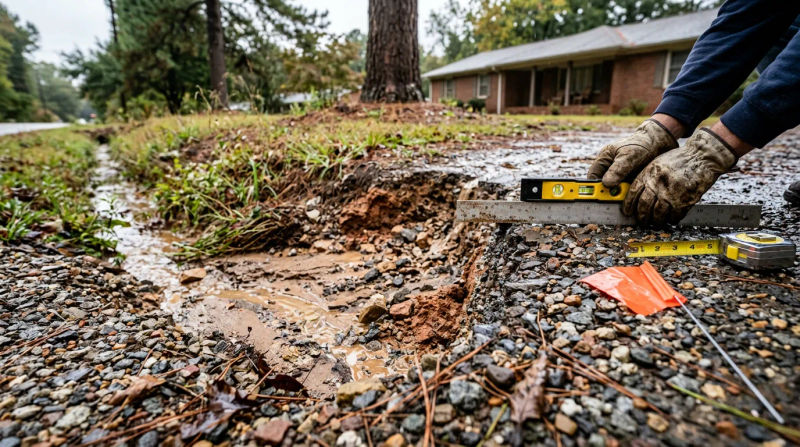
It’s a familiar story for many property owners in Mount Olive. An October storm rolls through overnight, and in the morning, you discover your gravel driveway is a mess of ruts, gullies, and displaced stone. What was a smooth, reliable surface yesterday is now a challenge to navigate. This kind of driveway washout isn’t just an inconvenience; it’s a clear signal that there’s an underlying problem with how your driveway was constructed and how water moves across your property.
As an excavation and grading foreman with over a decade of experience in this area, I’ve seen firsthand how a single heavy rain can expose years of hidden issues. The cooling temperatures mean we're heading into the wetter part of the year, making now the critical time to diagnose these problems before they worsen over the winter.
Common Signs and Symptoms
A washed-out driveway is the most obvious symptom, but the problem often starts smaller. Paying attention to the early warnings can save you from a much larger repair down the road. Our crews are trained to spot these subtle but significant driveway base failure signs during assessments.
Look for these red flags after it rains:
- Ruts and Gullies: These are the channels carved by flowing water. If you see distinct lines where water has cut through the gravel, it means the flow is too concentrated and powerful for the surface to handle.
- Spongy or Soft Spots: Does a section of your driveway feel soft or squishy under your tires or feet? This indicates that water has saturated the base layer beneath the surface gravel, compromising its structural integrity. This is a classic sign of base failure.
- Recurring Potholes: Filling a pothole only to have it reappear after the next storm is a frustrating cycle. This happens when the base beneath the hole is weak and holding water, causing any new material to be quickly pushed out.
- Exposed Base Material or Fabric: If you can see larger, chunkier rocks or a black landscape fabric showing through your top layer of gravel, it means the surface has been eroded away.
- Washed-Out Edges: The sides of a gravel driveway are its weakest point. If you notice the edges crumbling or the gravel spilling into your yard, it’s a sign that water is running off the sides too quickly, causing gravel driveway erosion Mount Olive properties frequently experience.
- Persistent Puddles: Water should shed off your driveway within hours of a storm. If puddles linger for a day or more, it means the surface is not properly graded and is holding water instead of directing it away.
What Causes This Problem
A driveway is more than just a layer of gravel; it’s a system designed to support vehicles and manage water. When that system fails, it’s almost always due to a problem with its foundation or its ability to handle drainage. Here in Mount Olive, our mix of flat terrain and heavy clay subgrades can make these issues particularly challenging.
- Improper Crown or Slope: A properly constructed driveway is not perfectly flat. It should have a “crown” - a high point in the center that allows water to run off to both sides. Alternatively, it can be sloped to one side. A flat driveway acts like a basin, trapping water that then soaks into the base or carves channels as it tries to escape.
- Inadequate Base and Compaction: This is the number one cause I see in the field. A driveway needs a solid foundation of compacted crushed stone (often called ABC or crusher run). This layer provides the strength. If the base is too thin, made of the wrong material, or - most critically - was not compacted in layers with heavy machinery, it will settle and shift, creating low spots where water can pool and weaken the entire structure.
- Poor Subgrade Preparation: Before any stone is laid, the underlying soil, or subgrade, must be properly graded and compacted. Mount Olive’s compacted clay subgrade doesn’t absorb water well. If the subgrade isn’t shaped to drain, water gets trapped between the clay and the gravel base, creating a soupy, unstable foundation.
- Overwhelming Water Runoff: Your driveway doesn’t exist in isolation. Water from your roof, gutters, and surrounding yard can all be directed onto it. Many properties, including the classic 1950s brick Ranch homes common in the area, sit on large lots where the original landscaping didn't account for modern drainage needs. This can funnel huge amounts of water onto a driveway that simply wasn't designed to handle that volume.
- Lack of Proper Drainage Features: For longer driveways or those on a slope, surface grading alone isn’t enough. Water needs a designated path. Clogged or undersized culvert pipes under the driveway can cause water to back up and flow over the top. The absence of ditches or swales alongside the driveway means runoff has nowhere to go but down the driving surface.
- Edge Instability: Without a solid shoulder or defined edge, gravel is free to migrate. Water flowing off the crown will take the path of least resistance, eroding the sides and narrowing the usable surface of the driveway over time.
When to Call a Professional
It can be tempting to grab a rake and a few bags of stone from the hardware store to patch a washed-out spot. While this might be a temporary cosmetic fix for a very minor issue, it doesn’t solve the underlying problem. The washout will return with the next heavy rain.
You should contact an experienced professional when you see:
- Recurring Problems: If you have to fix the same spots after every storm, it’s a clear sign of a systemic failure that patching won’t solve.
- Significant Material Loss: If you’ve lost several inches of gravel across a large area, simply topping it off is not a cost-effective or lasting solution.
- Signs of Base Failure: Spongy spots, deep ruts, and recurring potholes are not surface-level issues. They require excavating the compromised material and rebuilding the base correctly.
- Complex Drainage Issues: If the water is coming from your yard, a neighbor’s property, or a roadside ditch, the solution involves more than just driveway work. It requires a comprehensive grading and drainage plan. This is especially true for washout repair for rural driveways, which often deal with much larger volumes of water over longer distances.
When our technicians arrive on-site, our process isn't just to dump more rock. We start with a full diagnostic. We assess the grade, identify the source of the water, and probe the base to determine its depth and stability. A true repair involves regrading the subgrade and base with the proper slope, installing new, compacted base material in layers, and ensuring the final surface is properly crowned to shed water effectively. Sometimes this also includes installing culverts or cutting in swales to manage water flow for good.
Conclusion
A reliable driveway is built from the ground up. The gravel you drive on is just the finished surface; the real work lies in the compacted base and the thoughtful management of water. A driveway washout is your property’s way of telling you that one of these foundational elements has failed.
Ignoring the problem or applying temporary patches will only lead to more significant erosion and a more expensive fix later on. By understanding the root causes - from poor compaction to improper grading - you can make an informed decision. Addressing these issues proactively, especially before the wet winter months set in, will ensure you have a safe, stable driveway that lasts for years to come.
If you notice any of these signs, contact a local excavation contractor for an inspection. An expert can diagnose the true cause of the failure and recommend a permanent solution.