
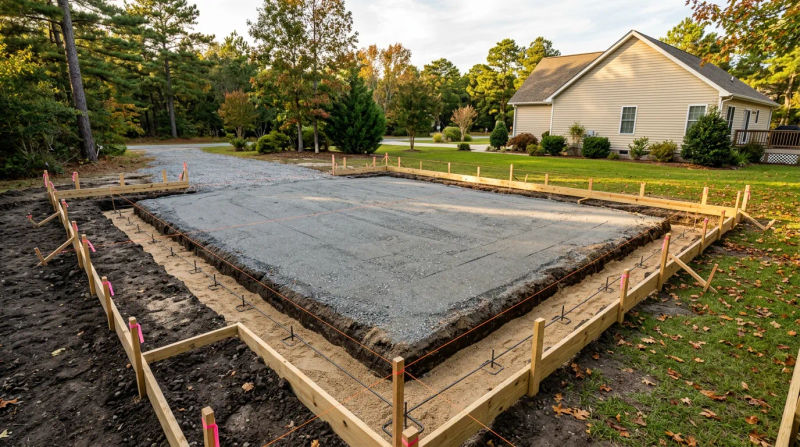
When a homeowner in Fremont called us about a new detached garage they wanted to build, I knew this project would be about more than just moving dirt. Their property featured a beautiful, pre-1940s Craftsman-style home, and the new structure needed to complement it, starting from the ground up. The challenge wasn't just digging a hole; it was about creating a perfectly stable and level foundation that would stand the test of time, right alongside a piece of local history. They were concerned about finding a team that could handle the precision required for a garage footing excavation Fremont project, especially given the variable soil conditions we often see in the area. They needed a partner who understood that a solid garage starts with an expertly prepared footing trench. That’s when they reached out to LRC Excavating and Grading.
Building a new structure next to an older one requires a delicate touch. You have to respect the existing landscape and ensure the new work doesn’t compromise the integrity of the original home. The client’s biggest fear was a rushed job that would lead to a cracked garage slab or settlement issues down the road. They needed a foundation they could trust, and it was our job to deliver it.
The Assessment
When my crew and I arrived on-site in Fremont, the first thing we did was walk the property with the homeowner and the building plans. The proposed garage site was a relatively level patch of lawn, but from my 14 years in this business, I know that looks can be deceiving. In Fremont, you can hit a pocket of soft soil or a patch of stubborn clay just a few feet from what looks like perfect ground. Small changes in elevation and soil moisture can make footing trenches cave in or turn soft if they’re not managed correctly.
Our initial assessment involved several key steps:
- Site Layout and Staking: We used the architectural plans to stake out the exact perimeter of the new garage foundation. Using a laser level, we established our benchmark elevation. This is the critical reference point that everything else is measured against. Getting the footing trench on-grade Fremont starts right here - if your layout is off by even an inch, the entire project will be compromised.
- Soil Evaluation: We took a few test digs with a hand auger to get a feel for the soil composition. We found a top layer of loamy soil, which was great, but underneath was a denser clay that holds moisture. This confirmed my initial thought: we’d need to sequence the excavation carefully. Digging the trenches too far in advance of the concrete pour could allow rain to saturate the clay, turning our perfect trench bottom into a muddy mess.
- Access and Logistics: We planned our equipment access route to minimize disruption to the homeowner’s established lawn and landscaping. We decided a compact track loader and a mini-excavator would be the perfect combination - powerful enough for the job but nimble enough to work precisely without damaging the surrounding area. This careful planning is a hallmark of how LRC Excavating and Grading approaches every project.
We confirmed with the homeowner that the key to success would be precision and timing. We wouldn't just be digging; we'd be sculpting the earth to create a perfect form for their new foundation. This phase is all about planning to ensure the foundation footing excavation goes off without a hitch.
Our Solution
With our assessment complete, we scheduled the work for a clear week in October. The cooler temperatures and lower humidity meant the soil would be more stable and workable, giving us a prime window to execute our plan. The LRC Excavating and Grading process is built on organization and a standardized workflow, which was essential for this project.
Our 3-person crew began by setting up batter boards and string lines, creating a precise physical grid that mirrored the foundation plan. This gave our excavator operator a perfect visual guide. Using our mini-excavator, we began the foundation footing excavation. The operator carefully carved out the trenches, ensuring the walls were straight and the depth was consistent. We dug to a depth of 24 inches, as specified by the building code for our region, to get below the frost line and into stable, undisturbed soil.
One of the most critical aspects of this job was keeping the trench bottom clean and firm. As the bucket removed soil, a crew member followed behind with a flat shovel and a hand tamper, cleaning out any loose material and checking for soft spots. This is a non-negotiable step for proper excavation compaction for footings. If the base isn't solid, the entire weight of the structure is at risk. We found the native clay to be firm and stable, requiring only minor hand-tamping to prepare it for concrete.
We coordinated directly with the concrete contractor, scheduling our work to be completed just hours before their arrival. This is a crucial sequencing step that LRC Excavating and Grading prides itself on. By minimizing the time the trench is open, we prevent cave-ins and water accumulation. When the city inspector arrived to check our work before the pour, he was impressed with the clean, sharp lines of the trenches and the perfectly level grade. He signed off immediately, with no corrections needed.
The Results
The outcome was exactly what we and the homeowner had hoped for: a textbook-perfect foundation footing excavation. When the concrete trucks arrived, they were able to pour directly into clean, dry, and perfectly dimensioned trenches. The concrete contractor even commented on how much easier our prep work made his job, saving him time and materials.
Before we started, the site was just an undefined patch of grass. After just two days of work by the LRC Excavating and Grading team, it was transformed into a precise and stable foundation footprint, ready to support the new garage for decades to come. The homeowner was thrilled with the efficiency and professionalism of our crew. They were especially pleased that we left the rest of their property untouched, with no ruts or damage to their lawn.
The real result isn't just the excavated trench; it's the peace of mind that comes from knowing the job was done right. By focusing on a meticulous assessment and a carefully executed solution, we eliminated the risks of foundation settlement, cracking, and future structural problems. This project is a perfect example of how expertise in garage footing excavation Fremont can set the stage for a successful build.
Conclusion
A building is only as strong as the ground it stands on. For this historic Fremont property, ensuring the new garage had a flawless foundation was our top priority. Through careful planning, precise execution, and a deep understanding of local soil conditions, the team at LRC Excavating and Grading delivered a result that exceeded expectations and provided a solid base for the homeowner's vision. We turned a potential challenge into a seamless success story.
Ready for your own LRC Excavating and Grading experience? Contact us today for a free inspection.